The U.S. Energy Information Administration (EIA) reports that residential buildings account for a significant share of total energy consumption, making homes an important focus in broader efforts to improve energy efficiency and reduce operating costs. As homeowners increasingly prioritize sustainability, interior design is evolving beyond aesthetics alone. Energy-conscious planning is becoming a regular part of discussions about layout, lighting, materials, and household systems.
The growing interest in sustainable living has encouraged architects, designers, engineers, and technical consultants to work more closely together during residential projects. Insights from sources such as local electricians serving the Main Line illustrate how energy planning is increasingly connected to everyday design decisions. Rather than treating electrical infrastructure as a separate concern, many homeowners now view it as part of a comprehensive approach to creating functional, efficient, and visually appealing living spaces.
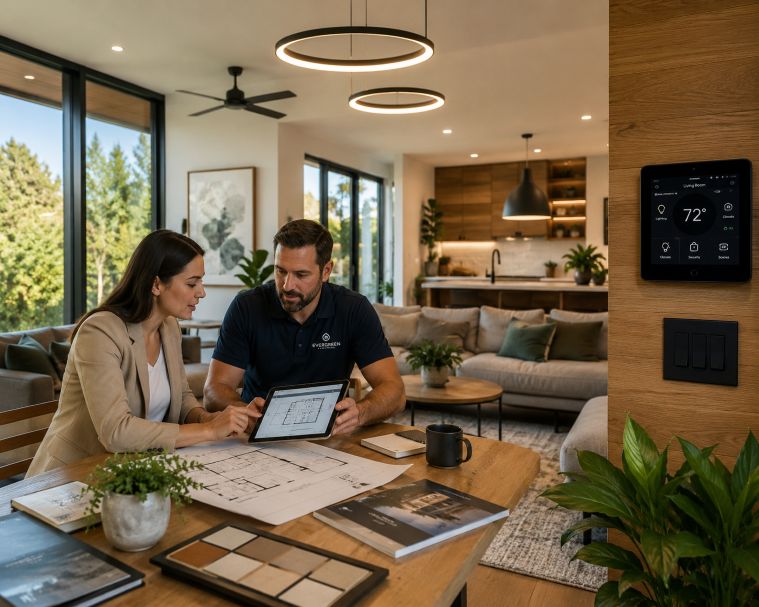
The Rise of Sustainable Home Design Trends
Over the past decade, sustainability has become a defining theme in residential construction and renovation. Research from the National Association of Home Builders (NAHB) shows that homebuyers consistently express interest in features that improve efficiency, reduce utility expenses, and support environmental goals.
What began with interest in solar panels and high-efficiency appliances has expanded into a broader design philosophy. Homeowners increasingly evaluate flooring materials, window treatments, insulation choices, lighting layouts, and furniture placement through the lens of energy performance.
This shift reflects changing priorities. Rising energy costs, increased awareness of environmental challenges, and advances in smart home technologies have encouraged people to think about how design decisions affect long-term household consumption.
As a result, modern interior design conversations often include questions such as:
- How can natural daylight reduce dependence on artificial lighting?
- Which materials help regulate indoor temperatures?
- Can room layouts improve heating and cooling efficiency?
- How can technology support energy management without sacrificing comfort?
These considerations demonstrate how sustainability has become integrated into everyday planning rather than remaining a specialized concern.
The Argument for Energy Efficiency in Decorative Decisions
Supporters of energy-conscious design argue that decorative choices have a greater impact on household performance than many people realize. While paint colors and furnishings may seem unrelated to energy use, numerous design elements influence how much electricity and climate control a home requires.
For example, strategic window coverings can reduce heat gain during summer months and help retain warmth during colder seasons. Data from the U.S. Department of Energy indicates that properly selected window treatments can significantly improve energy performance by reducing unwanted heat transfer.
Similarly, room layouts affect airflow and lighting efficiency. Open spaces may allow natural light to penetrate deeper into the home, reducing the need for artificial illumination during daytime hours. Furniture placement can also influence how effectively heating and cooling systems distribute conditioned air.
Supporters further argue that integrating efficiency early in the design process is often more cost-effective than making adjustments later. When energy goals are considered alongside decorative preferences, homeowners can avoid costly retrofits and achieve a better balance between appearance and functionality.
Advocates emphasize that energy-conscious design does not require sacrificing style. Advances in lighting technology, smart controls, and sustainable materials have created more options than ever before. Products that once appeared highly technical are now available in designs that complement a wide range of interior aesthetics.
Counterarguments: Aesthetics and Upfront Costs
Despite growing support for sustainable design, critics raise valid concerns. One common argument is that energy-focused planning can place excessive emphasis on performance metrics at the expense of personal expression.
Interior design has traditionally centered on creativity, comfort, and individual taste. Some homeowners worry that efficiency-driven recommendations may limit design flexibility or encourage choices that feel overly utilitarian.
For example, maximizing daylight may influence furniture placement or window treatment selections. Energy-efficient fixtures may not always align with a homeowner’s preferred decorative style. While manufacturers continue expanding design options, aesthetic compromises can still occur in certain situations.
Another concern involves initial costs. Smart controls, upgraded lighting systems, energy-monitoring devices, and higher-performance materials often require greater upfront investment. Although these improvements may generate savings over time, the financial benefits are not always immediate.
The International Energy Agency (IEA) notes that energy-efficiency investments frequently deliver long-term economic value, but homeowners must often balance those future returns against current budget constraints. For families already managing renovation expenses, additional efficiency upgrades may feel difficult to justify.
Critics therefore argue that sustainability goals should remain flexible rather than becoming rigid requirements. Homeowners have different priorities, lifestyles, and financial circumstances, making a one-size-fits-all approach impractical.
Smart Lighting, Controls, and Electrical Planning
The debate becomes particularly relevant when discussing lighting and electrical infrastructure. Lighting accounts for a meaningful portion of residential electricity use, making it an area where design and energy considerations naturally intersect.
LED technology illustrates this relationship clearly. Research from the U.S. Department of Energy shows that LEDs consume significantly less electricity and generally last much longer than traditional incandescent lighting. As a result, designers increasingly incorporate layered LED lighting strategies that support both visual appeal and efficiency.
Smart controls add another dimension. Occupancy sensors, programmable schedules, dimmers, and connected lighting systems allow homeowners to manage electricity consumption more precisely. These technologies can automatically adjust lighting based on occupancy, time of day, or user preferences.
Electrical planning also influences future adaptability. During renovations or new construction projects, designers and technical professionals may coordinate outlet placement, wiring infrastructure, charging stations, and automation systems that support evolving household needs.
Professionals involved in electrical system planning often contribute practical insights regarding load management, safety, lighting design, and technology integration. Their role extends beyond installation, helping ensure that energy-related features operate effectively within the overall design vision.
This collaborative approach reflects a broader trend in residential construction. Rather than treating design and engineering as separate disciplines, many projects increasingly combine aesthetic goals with operational performance objectives.
Balancing Design Preferences with Long-Term Energy Goals
The discussion surrounding energy-conscious interior design is ultimately less about choosing between beauty and efficiency and more about finding an appropriate balance between the two. Modern homeowners increasingly recognize that sustainability extends beyond energy consumption alone. Considerations such as air quality, ventilation, and healthy indoor environments also contribute to overall comfort and satisfaction within a living space. As a result, many design decisions now aim to support both visual appeal and long-term well-being.
Design remains a highly personal process. Homes should reflect the preferences, lifestyles, and values of the people who live in them. At the same time, growing awareness of energy consumption encourages homeowners to consider how everyday design choices affect long-term comfort, operating costs, and environmental impact.
A balanced approach recognizes that neither extreme offers a complete solution. Ignoring efficiency entirely may lead to higher expenses and missed opportunities for performance improvements. Conversely, focusing exclusively on energy metrics may overlook important aspects of comfort, character, and personal expression.
As technologies continue evolving and sustainable materials become more accessible, the distinction between attractive design and efficient design may continue to narrow. Many modern products already demonstrate that performance and aesthetics can coexist successfully.
Energy-conscious interior design is therefore best viewed as an extension of thoughtful home planning. By considering both visual appeal and long-term energy goals, homeowners can create living spaces that are comfortable, adaptable, and better aligned with the demands of modern life.